Integrated Fisheries Ecology Lab logo Integrated Fisheries Ecology Lab logo Integrated Fisheries Ecology Lab
  • Research
  • People
  • Papers
  • News
  • Prospective students
  • Resources
  • CV

Integrated Fisheries Ecology Lab

Understanding sources of risk and resilience in fisheries

Understanding risk and resilience in marine, coastal, and freshwater fisheries.

We work alongside Indigenous and government partners combining field data, social-ecological theory, and quantitative models to understand risk and resilience in fisheries and work to inform the people and communities who manage them.

See our research See our lab
Dendritic network representing the watersheds we study.

What we study

Resilient fisheries emerge from feedbacks between fish, people, and managers, all nested within broader social, ecological, and political contexts.

More about our research
  • Landscape ecology and life histories of exploited fishesHow growth, maturity, and body size vary across lakes, rivers, and coastlines.
  • Risk and resilience in marine and freshwater fisheriesStatus assessments, reference points, and forward simulations of recovery.
  • Coupled feedbacks between people and natureHarvesters, managers, and fish as one social-ecological system.
  • Trade-offs in conservation and fisheries managementEvidence for decisions that span jurisdictions and governance systems.
  • <
    Better fisheries assessment and monitoringModels and survey designs that make the most of limited data.

Current projects

Some of our current work focuses on marine protected areas, wild salmon conservaton, knowledge pluralism, and integrated quantitative risk assessments.

Salmon

Pacific salmon: status, reference points, and rebuilding

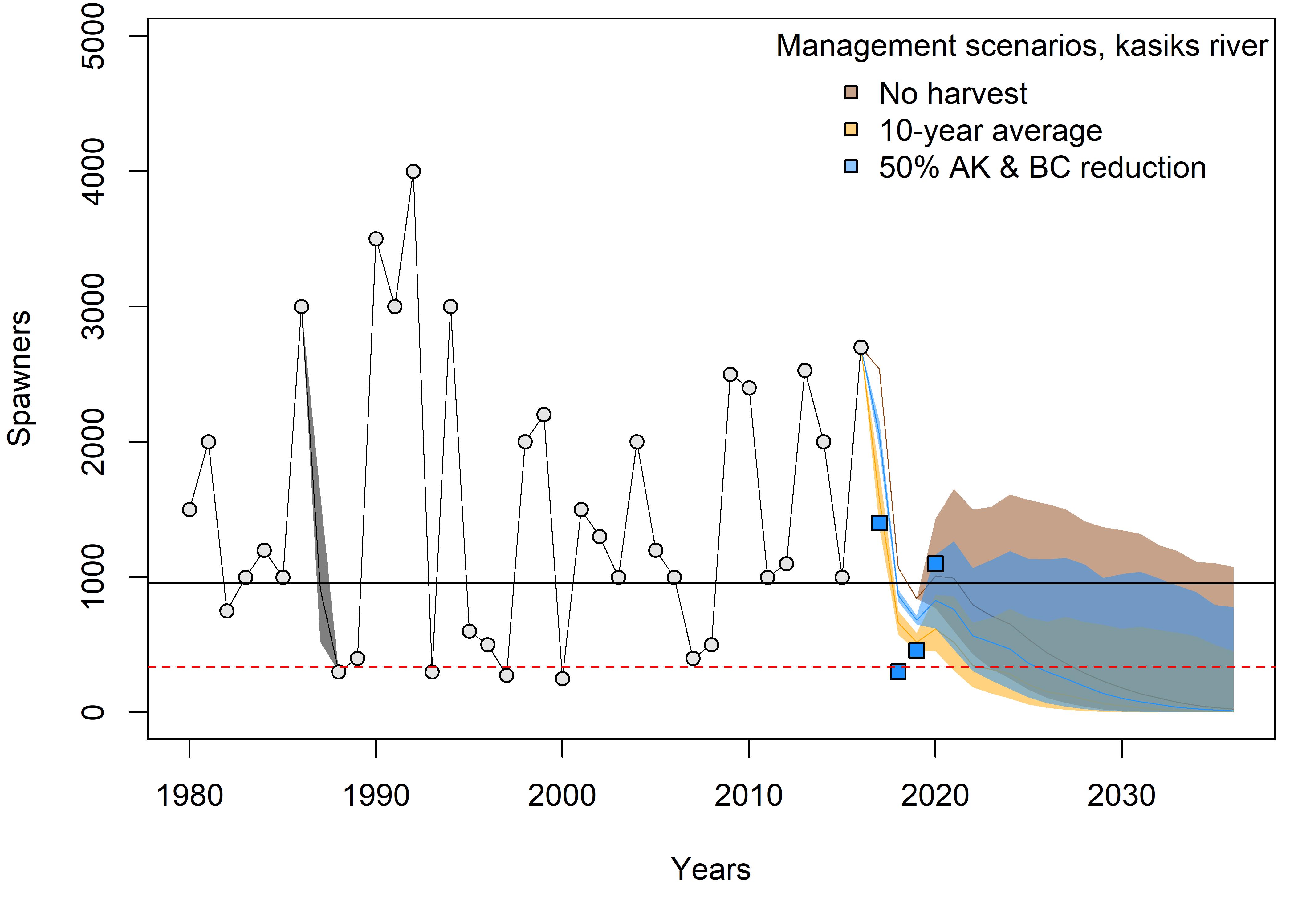
With the Central Coast Indigenous Resource Alliance, we built a Bayesian time-series model of coho populations across the North and Central Coast to identify the role of time-varying productivity and harvest management in future recovery trajectories.

52coho populations modelled
51%of populations raised conservation concerns in recent years
Read about this project
Observed coho spawner abundance with forward simulations fanning out under three harvest scenarios.

Coho population dynamics and forward-simulations under alternative scenarios of future harvest management.

Git Qṃsistá: revitalising herring ecosystems in a warming sea

Weaving Kitasoo Xai'xais knowledge and Western science to restore Pacific herring spawning areas in Kitasu Bay.

Kitasoo Xai'xais First Nation and Stewardship Authority, DFO, Oceana Canada, University of Victoria

Dungeness crab and spot prawn in a changing coast

Movement, habitat use, and the status of marine invertebrate fisheries: the highest-value fisheries in Pacific Canada and the least assessed.

Kitasoo Xai'xais First Nation, Musgamagw Dzawada'enuxw Fisheries Group, Coastal Guardian Watchmen, DFO

Groundfish life histories and spatial protections

How rockfish life histories shift across space and time, and whether marine protected areas deliver the recoveries they are designed for.

Central Coast First Nations, CCIRA, DFO

Scale transitions in population dynamics

Local processes are nonlinear and patchy; aggregate dynamics are not their average. We study what happens in between these scales, and what risks arise from ignoring it.

Salmon Watersheds Lab SFU, Central Coast Management Council, COSEWIC Marine Fishes SSC, DFO Science

What makes an exploited population resilient?

Building compensation from first principles (life history, plasticity and density dependence) to ask where sustainable harvest actually comes from.

John Post, Robert Arlinghaus, Hillary Ward, and others

Inclusive risk assessment in an era of co-governance

Reference points encode values, not just biology. We work on assessment frameworks that serve co-governance rather than talking past it.

Fisheries Resources and Reconciliation Agreement, Central Coast Management Council, Kitasoo Xai'xais Stewardship Authority

Life-history diversity in Canada's lake trout

Growth records from 1,100 lake trout across 30 lakes, and a social-ecological halo of depletion around the most accessible ones.

BC provincial fisheries data
No matching items

News

All news
October 30, 2026

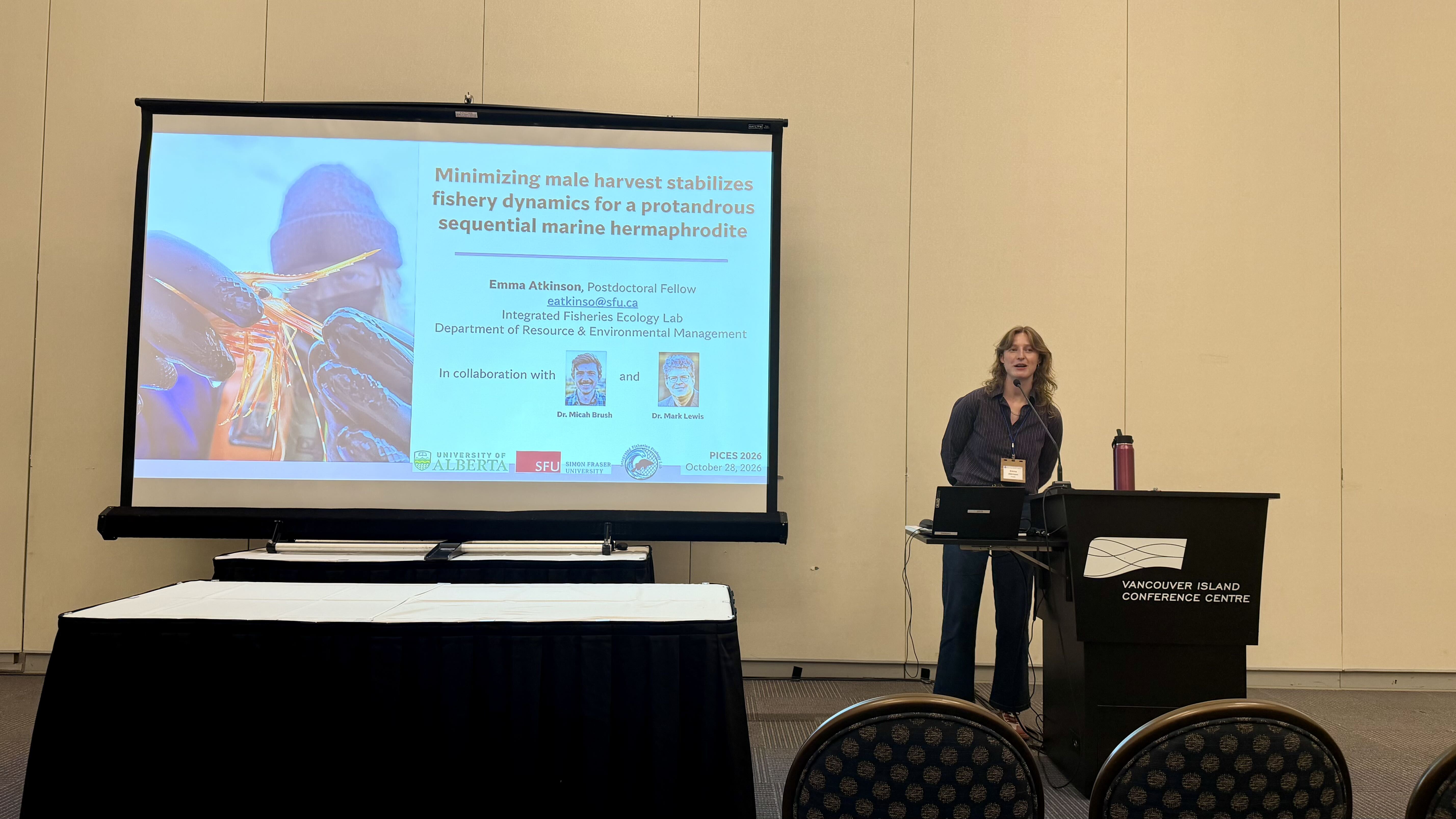
The lab at PICES 2026

Lab members presented their work at the PICES Annual Meeting in Nanaimo.

October 24, 2026

Our new website

The Integrated Fisheries Ecology Lab has a new home on the website!

September 1, 2026

Welcome to our new students!

Marie Vivet, Connor McLeod, Emma Graham, and Arianne Nickels join the lab.

No matching items

From the field

Time on the water, field work, and community visits with our partners.

More in our news
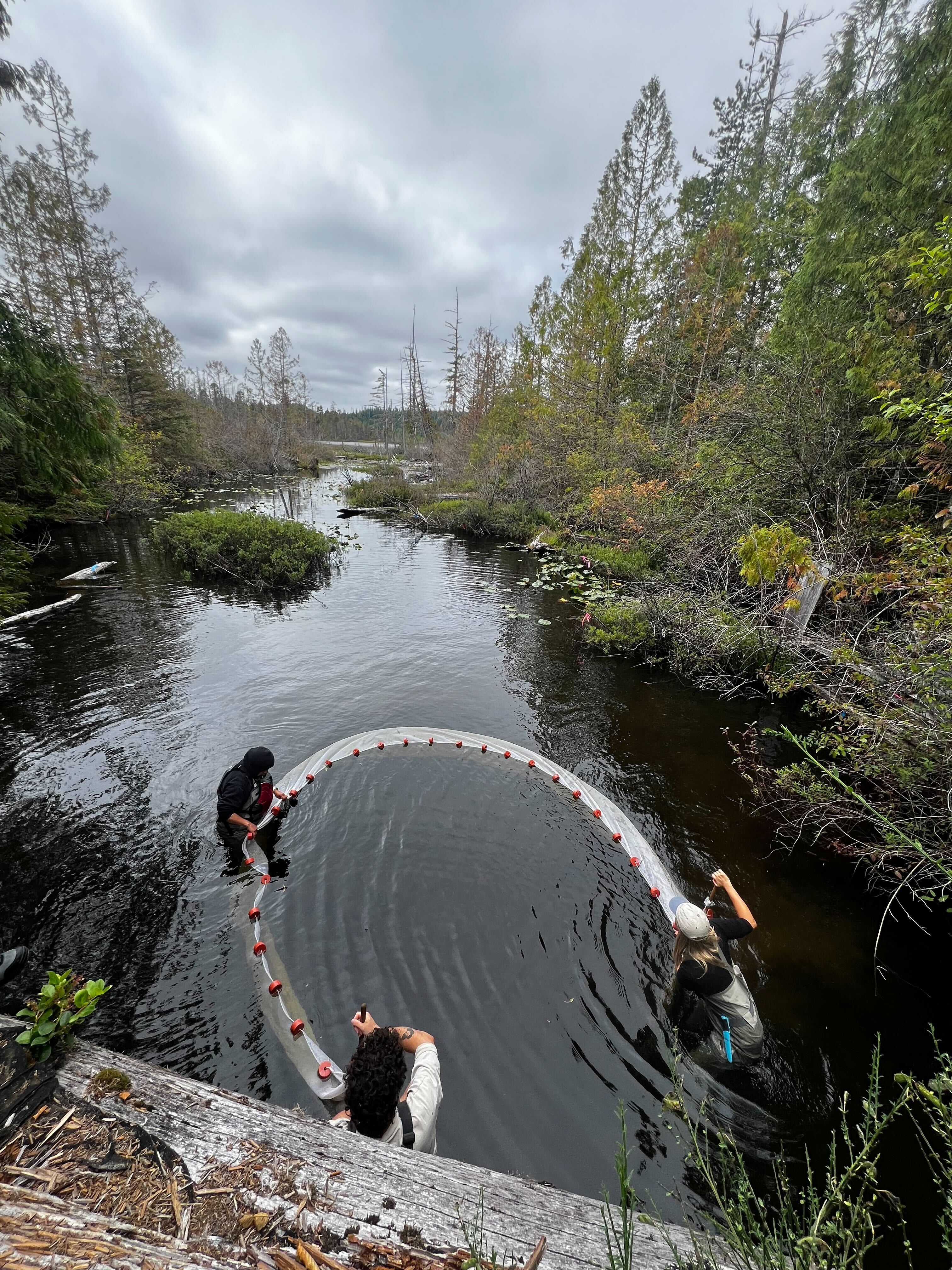
Hutton Noth (PhD Student) and Michelle Fortier (MRM Student) work with Ha'oom Fisheries Society to survey juvenile coho salmon in the West Coast of Vancouver Island.
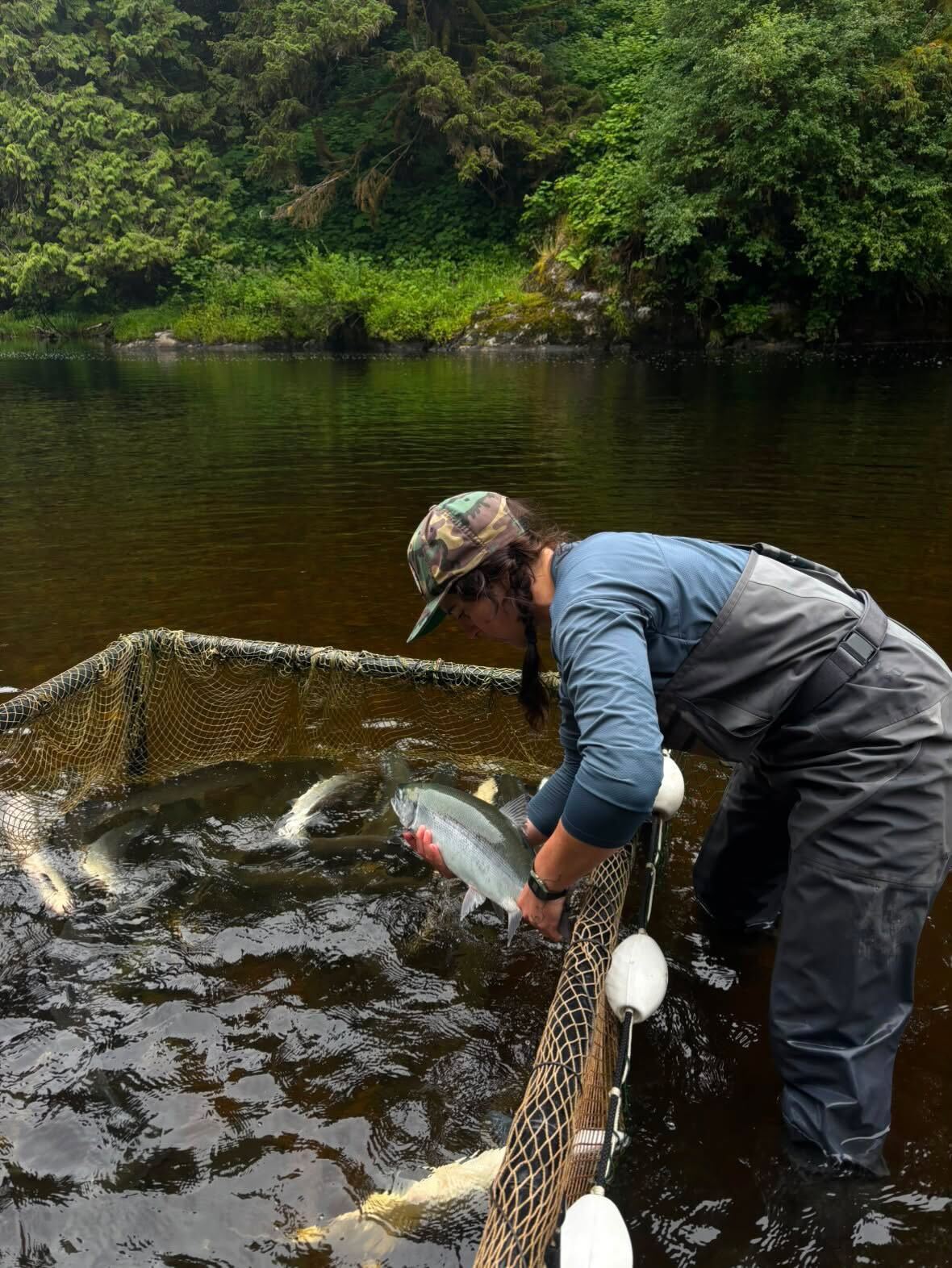
Kate Mussett (PhD Student) handles sockeye salmon at the Koeye River.
PhD Student Kate Mussett works alongside alongside members of the Heiltsuk Integrated Resource Management Department to survey sockeye salmon at the Koeye River.
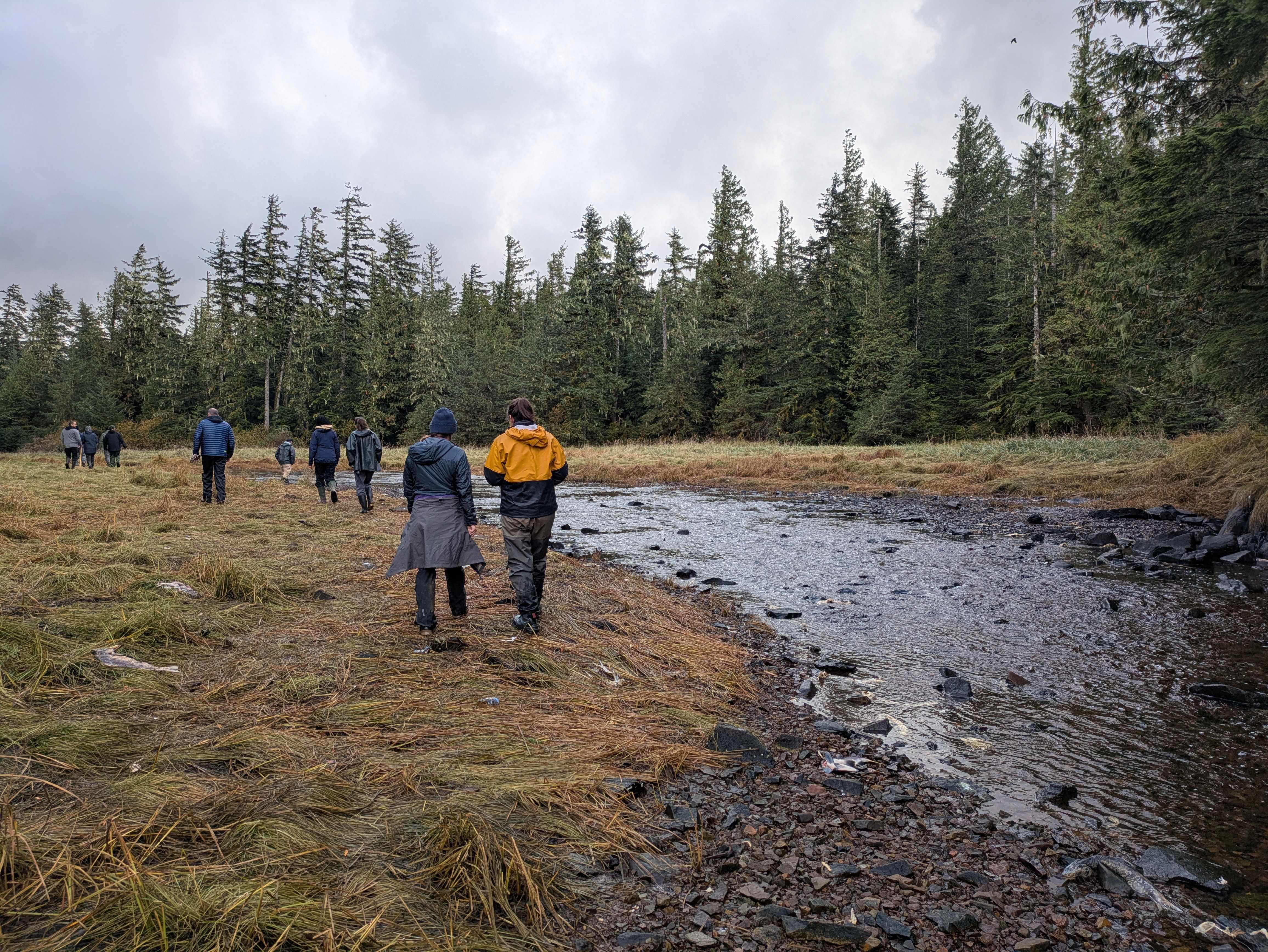
Members of the FRRA benchmarks subcommitee meet at Kunsoot.
Members of the Fisheries Resources Reconciliation Agreement salmon benchmarks subcommitee gather at Kunsoot, Bella Bella, BC to discuss holistic and integrative perspectives of risk to Central Coast salmon.
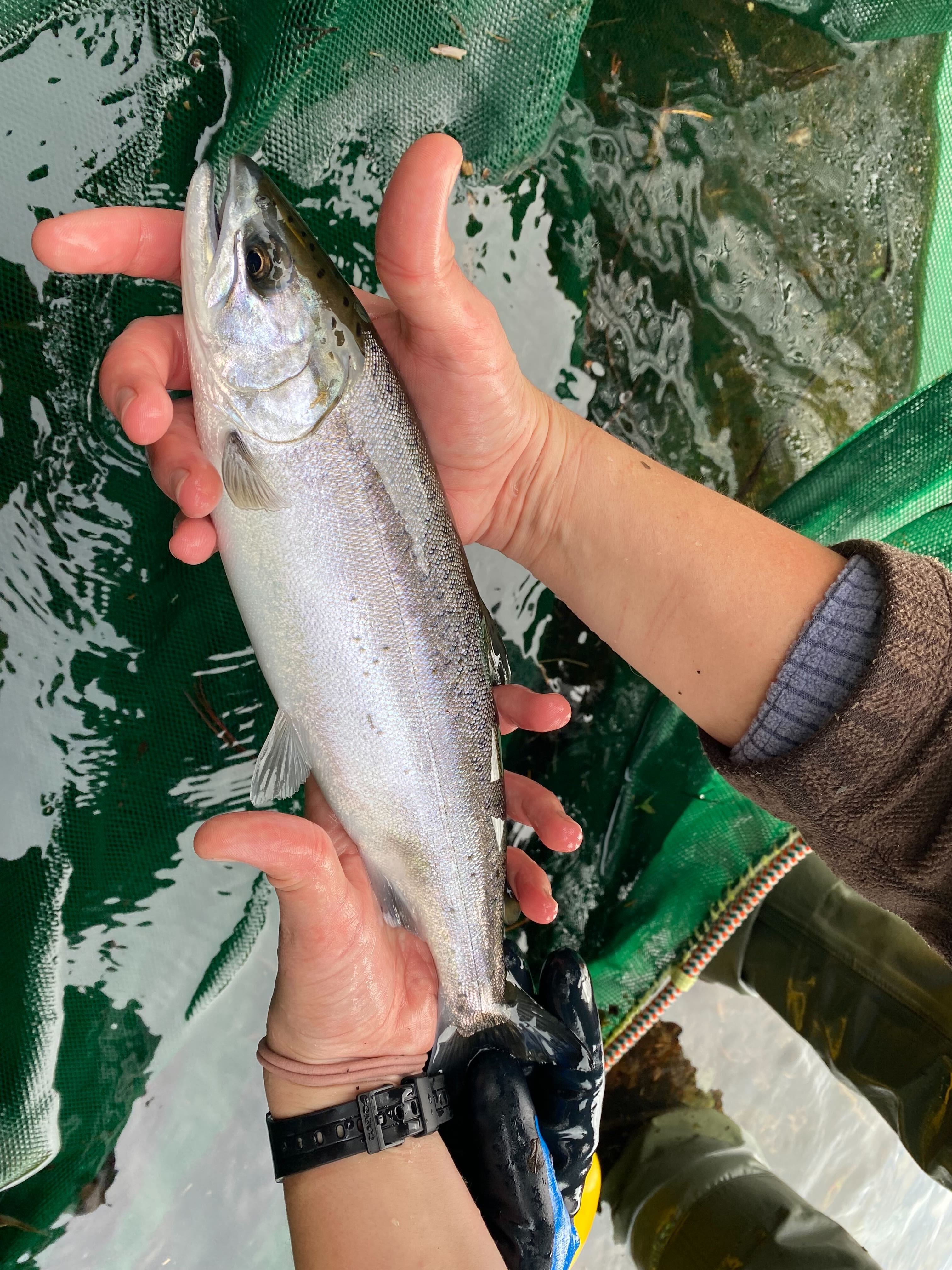
Hutton Noth tags juvenile salmon in the Kennedy Watershed.
Hutton Noth (PhD Student) and staff from Ha'oom Fisheries Society survey juvenile salmon in the Kennedy Watershed on the West Coast of Vancouver Island.

Partners and collaborators

We work alongside Indigenous partners, government researchers, and research groups across Canada.

  • Central Coast First NationsCoastal and marine stewardship, co-governance
  • Central Coast Indigenous Resource AllianceSalmon, crab, and groundfish ecology and management
  • Ha'oom Fisheries SocietySalmon and spot prawn ecology and management
  • Fisheries Management LabSFU School of Resource and Environmental Management
  • Salmon Watersheds LabMetapopulations and disturbance, SFU
  • COSEWICMarine Fishes Species Specialist Subcommittee

Join the lab

We welcome curious, collaborative people from all backgrounds that are especially motivated to work at the intersection between quantitative ecology, Indigenous-led stewardship, and marine policy.
Information for prospective students

  • Graduate studentsMaster's and PhD positions through SFU REM.
  • Postdoctoral fellowsWe're happy to support scholarship and fellowship applications.
  • UndergraduatesResearch assistant and honours projects.

Simon Fraser University is located on the unceded traditional territories of the xʷməθkʷəy̓əm (Musqueam), Sḵwx̱wú7mesh (Squamish), səl̓ílwətaʔɬ (Tsleil-Waututh), and kʷikʷəƛ̓əm (Kwikwetlem) Nations.

 
  • SFU REM

  • Fisheries Management Lab

  • Contact